
A thought-provoking book that mixes together biography, psychology, criticism, and cultural history. The book is part memoir, part biography with a focus on gay and avant-garde art during the seventies and eighties.
British author Olivia Laing reflects on her period of loneliness while she lived in New York after a break-up. She chose to learn more about loneliness through art and learn more about herself maybe, discovering more about the artists closer to her heart – she was raised in a lesbian family. She examines her loneliness in the big city blending her personal reflections with analysis and biographies of outsider artists that take center stage – Edward Hopper (1882 – 1967), Andy Warhol (1928 – 1987), David Wojnarowicz (1954 – 1992) and Henry Darger (1892 – 1973).
One of the main ideas revolves around the use of art to cope with loneliness in a creative way. She finds meaning and value in loneliness, as she comes to understand that it is okay not to be okay, that being happy all the time is impossible. This quote stands upon her ideas:
„There is a gentrification that is happening to cities, and there is a gentrification that is happening to the emotions too, with a similarly homogenising, whitening, deadening effect. Amidst the glossiness, of late capitalism, we are fed the notion that all difficult feeling – depression, anxiety, loneliness, rage – are simply a consequence of unsettled chemistry, a problem to be fixed, rather than a response to structural injustice or, on the other hand, to the native texture of embodiment, of doing time, as David Wojnarowicz memorably put it, in a rented body, with all the attendant grief and frustration that entails.”
She doesn’t put loneliness on a golden plate. She only speaks with empathy in a lucid and expressive way about the feelings we maybe sometimes try so hard to avoid. Because loneliness is seen as something to be ashamed of, a taboo subject in our dynamic world. How can one feel lonely in a big city? How can one feel lonely when they have their family and friends on social media, just a click away?
We are constantly being fed with these fake narratives about extreme positivity, where everyone is presenting their full glam version of life, where people are doing things, going places, and the fear of missing out takes control, while you feel more out of touch with others and yourself. We may live in a connected world, thanks to digitalisation and social media, but that can make us feel even more disconnected. Loneliness in crowded places can hit so much harder. Big digital platforms, big parties or big cities such as New York will not always fill the void.
“You can be lonely anywhere, but there is a particular flavor to the loneliness that comes from living in a city, surrounded by millions of people… mere physical proximity is not enough to dispel a sense of internal isolation… Cities can be lonely places, and in admitting this we see that loneliness doesn’t necessarily require physical solitude, but rather an absence or paucity of connection, closeness, kinship: an inability, for one reason or another, to find as much intimacy as is desired.”
She appears sometimes to hide her feelings and focus too much on the artists’ lives as if talking about herself becomes too intimate and therefore, difficult for the private person she appears to be. That is the feeling I get. But when she lets go, she is quite magical. I particularly loved her take on her contradictory impulses that drove her on social media:
I wanted to be in contact and I wanted to retain my anonymity, my private space. I wanted to click and click and click until my synapses exploded, until I was flooded by superfluity. I wanted to hypnotise myself with data, with coloured pixels, to become vacant, to overwhelm any creeping anxious sense of who I actually was, to annihilate my feelings. At the same time I wanted to wake up, to be politically and socially engaged. And then again I wanted to declare my presence, to list my interests and objections, to notify the world that I was still there, thinking with my fingers, even if I’d almost lost the art of speech. I wanted to look and I wanted to be seen, and somehow it was easier to do both via the mediating screen.
As an introvert at heart that needs some lonely time to decompress, I can relate to the role intimacy has in one’s life, while I acknowledge the need for balance, the need for people and human interaction. I will charge my batteries and be ready to go out into the world. My loneliness is a choice, a necessity for my wellbeing. But what happens when you have no control and loneliness sneaks up on you?
What does it feel like to be lonely? It feels like being hungry: like being hungry when everyone around you is readying for a feast.
I think that what we really want is to be seen, heard and understood. We may think loneliness can find its cure in somebody else. It may prove true or not, it depends on so many things. The author took her time and did not pursue another romantic relationship in a rush to escape loneliness. Instead, she turns to art. She decides to explore in depth the interpretations of urban isolation created by artists that saw themselves as outsiders.
„I don’t believe the cure for loneliness is meeting someone, not necessarily. I think it’s about two things: learning how to befriend yourself and understanding that many of the things that seem to afflict us as individuals are in fact a result of larger forces of stigma and exclusion, which can and should be resisted.”
I must confess, I knew nothing or very little about most of the artists presented in this book. This proved therefore an enlightening learning experience. She managed to make me curios, to leave the book, to google the artist and his work and then come back for more.
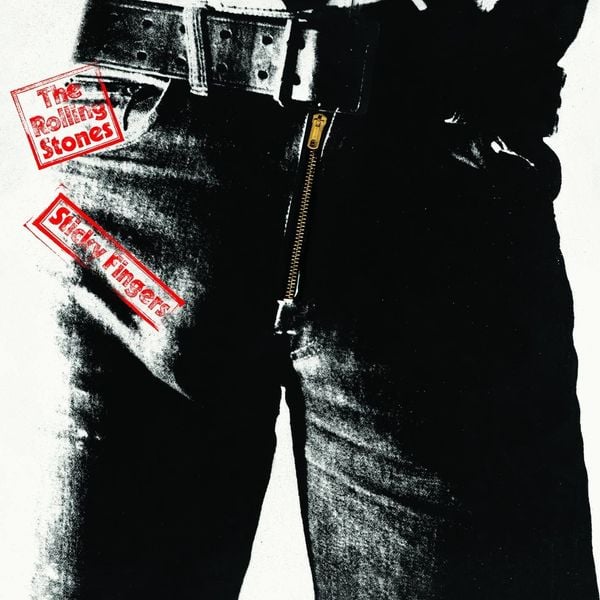
I knew Andy Warhol as I’ve seen his notorious screen-printed images of Marilyn Monroe or soup cans. Painting the ordinary is explained by Andy himself – „I just paint things I always thought were beautiful, things you use every day and never think about.” He was the man with the camera, he loved taking Polaroid pictures of everybody and everything - maybe another form of hiding behind the lens. I learned he founded a magazine in 1969, called Interview, that still exists and some more interesting facts about his art studio, The Factory, a cultural hotspot that also hosted lavish parties for the wealthiest socialites and celebrities. He worked with Craig Braun for probably the most iconic album cover – Sticky fingers for the Rolling Stones. Fun fact – Each copy contained an actual zipper attached to the front. Crazy! However, be aware, the tongue and lips logo was not Andy’s creation. He almost died on June 3, 1968, when Valerie Solanas, a radical feminist writer entered his office with a gun. The shots left him wearing a surgical corset for the rest of his life. He was friends with graffiti artist and neo-expressionist painter Jean-Michel Basquiat who became a part of his art world circle. “Jean-Michel lived like a flame. He burned really bright. Then the fire went out. But the embers are still hot” – Fred Braithwaite. This quote sparked my interest and now I want to see the movie „Basquiat„. One thing led to another 🙂

I learned more about Edward Hopper, a realism art painter and printmaker, who was fascinated with urban architecture and the American urban scene that depicted themes like solitude, loneliness, regret or boredom while using an effective combination of light and shadow to create mood. A big fan of Freud, he never really explained his art in detail, but simply said, „The whole answer is there on the canvas.” One of his most recognizable paintings is Nighthawks, which can currently be viewed at the Museum of Modern Art in New York City. This is the piece the author talks about, while she takes a deep dive into the analysis of the colours and geometry, making connections between the sense of melancholy of the painting with the personal life of the artist.

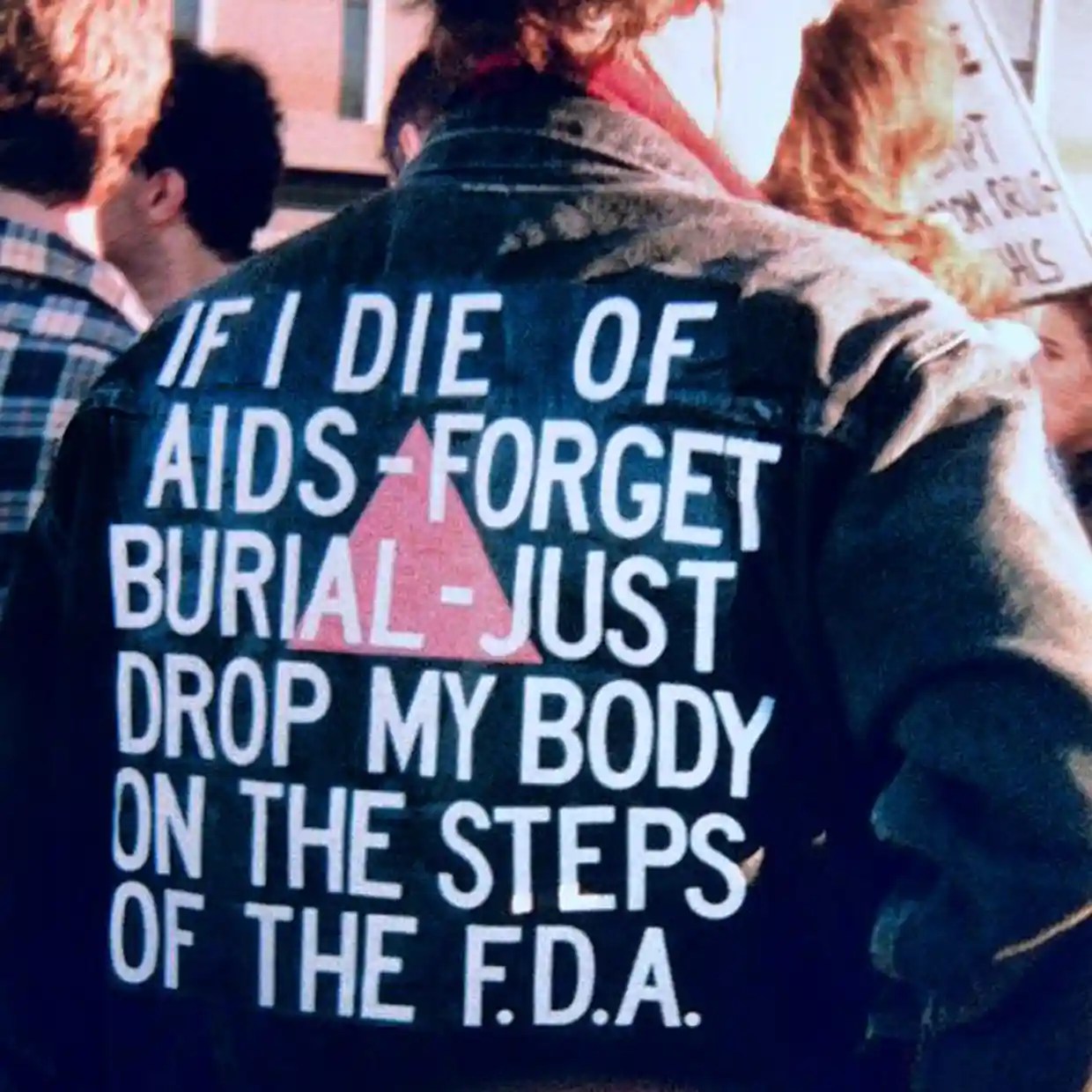
I discovered the artist, writer and AIDS activist David Wojnarowicz who was only 37 when he died of AIDS. From a violent childhood, beaten and abducted by an alcoholic father, to homelessness, drug abuse and sex work on the streets of New York City, to recognition as one of the most provocative artists of his generation. Nevertheless, a life spent suffering as what appears, the eternal outsider. “My rage is really about the fact that when I was told that I’d contracted this virus it didn’t take me long to realize that I’d contracted a diseased society as well.[] It is exhausting, living in a population where people don’t speak up if what they witness doesn’t directly threaten them,” he writes. His work, called Close to the Knives is the artist’s memoir where he also goes against religious leaders and politicians who responded to the AIDS crisis in a manner he disapproved, that included less sex education, or island quarantine for the victims. He makes art to be heard, to make a political statement. “To place an object or piece of writing that contains what is invisible because of legislation or social taboo into an environment outside myself makes me feel not so alone,” he writes.
Another artist that led a life of suffering, neglect and isolation was American artist Henry Darger, who worked as a hospital janitor in Chicago, Illinois, known for his epic fantasy novel manuscript more than 15,000 pages long, called The Story of the Vivian Girls, in What Is Known as the Realms of the Unreal, of the Glandeco-Angelinian War Storm, Caused by the Child Slave Rebellion, discovered after his death. The disturbing work talks about young children who were grotesquely being tortured and massacred. Darger inserted himself into the story as the children’s protector. Some say he was schizophrenic, a paedophile or a suppressed serial killer or that he had Asperger’s syndrome. We do not know for sure, but what we do know, is that his art speaks to us in a deep, haunting way.

Olivia Laing introduced me to a different world, a complex, dark one, but a hopeful world, nonetheless. Art holds this power – to translate pain in an universal language, accessible to anyone. All you need is to use your imagination and have an open mind. Art can save you from yourself and others from you. Your darkness and suffering will go somewhere where no one is hurt. On the contrary, your pain will move and inspire people. Maybe this is why these troubled artists chose art to communicate.
So many stories, so many emotions, so much complexity. Who would have thought loneliness is actually such a full package?


 Crâmpeie din viață by Nicoleta
Lasă un comentariu